
how-to
4 Things to Know About Gold Buyer Scales and Calibration
Editorial Team · · 5 min read
Last Updated: November 21, 2026
Quick Summary
Gold buyer scales are not automatically calibrated just because they are capable of it. Many states put commercial scales under weights and measures rules, but a scale can pass inspection one day and drift after being bumped, moved, or left near a hot window. Ask for a recent inspection record or a test weight check on the spot.
- One troy ounce is about 31.1 grams, while a standard ounce is about 28.3 grams.
- A buyer should zero the scale, let it stabilize, and keep the draft cover closed.
- A certified test weight on a level scale should read exactly what it says.
- A digital display does not equal accuracy because sensors drift over time.
- Buyers who take accuracy seriously keep certified calibration weights on hand and will run them in front of you.
Table of Contents
- Are Gold Buyer Scales Calibrated? What the Law Actually Requires
- How Gold Buyers Weigh Gold: Grams, Troy Ounces, and the Scale in Front of You
- How to Check a Jewelry Scale for Accuracy Using Gold Scale Test Weights
- Frequently Asked Questions
Are Gold Buyer Scales Calibrated? What the Law Actually Requires
Short answer: not automatically. A scale can be capable of calibration and still be off on any given day.
This question comes up a lot. Many states put commercial scales under weights and measures rules, but "required" and "verified" aren't the same, a scale can pass inspection one day, then get bumped, moved, or left near a hot window for months.
Calibration is a process, not a permanent state. If a buyer can't show a recent inspection record or prove accuracy on the spot, ask why. For the bigger picture, see our guide on whether gold buyers near me are trustworthy.
How Gold Buyers Weigh Gold: Grams, Troy Ounces, and the Scale in Front of You
Gold gets weighed in grams and troy ounces, and those aren't the ounces on your kitchen scale. One troy ounce is about 31.1 grams; a standard ounce is about 28.3 grams.
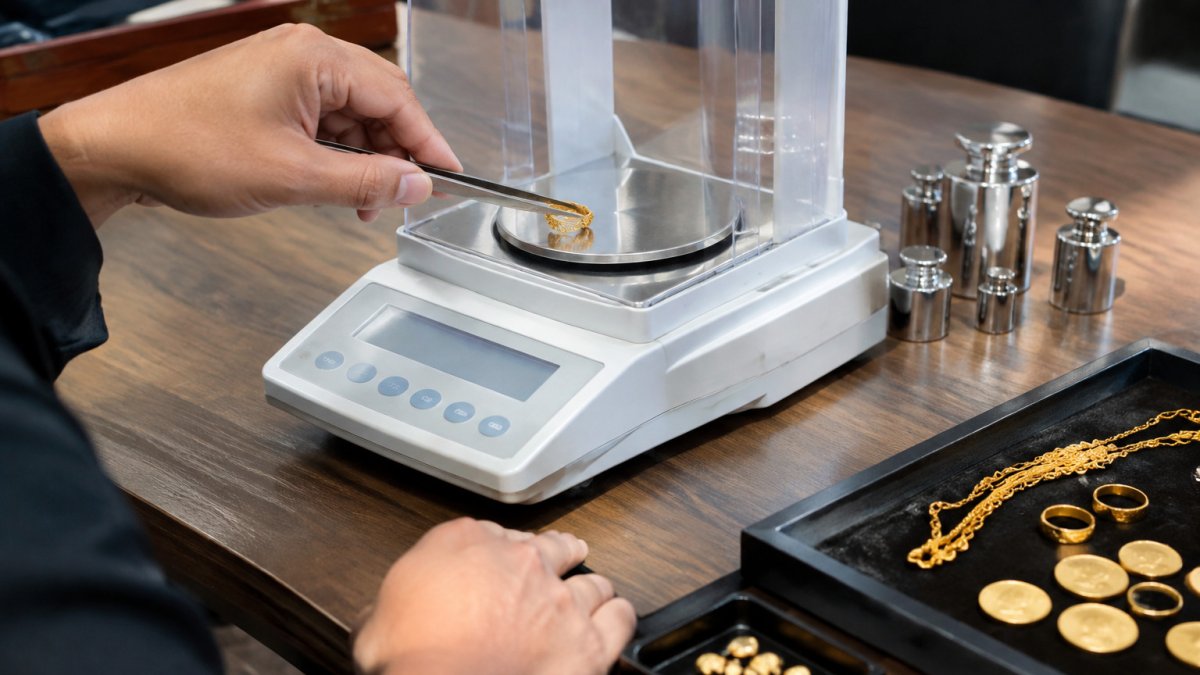
Precious metal scales typically read in grams or troy ounces, and a buyer should zero the scale, let it stabilize, and keep the draft cover closed.
Our breakdown of how to calculate gold price per gram shows the math, and you can check the current gold and silver prices we work from any time.
Here's how the numbers stack up when a buyer weighs your gold.
| Item | Value | Note |
|---|---|---|
| Troy ounce | About 31.1 grams | Not the ounce on your kitchen scale |
| Standard ounce | About 28.3 grams | Lighter than a troy ounce |
| Precious metal scale readings | Grams or troy ounces | Typical units buyers use |
| Before weighing | Zero the scale, let it stabilize | Keep the draft cover closed |
How to Check a Jewelry Scale for Accuracy Using Gold Scale Test Weights
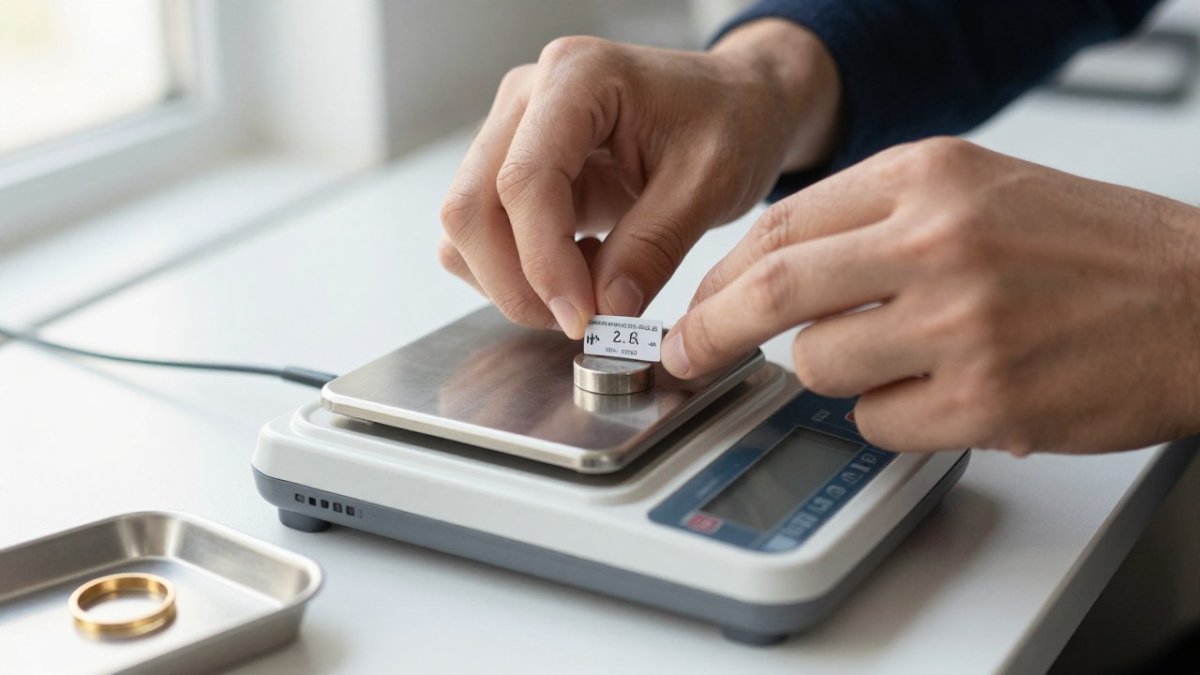
The fastest way to check a scale is a certified test weight: a known weight on a level scale should read exactly what it says. If it doesn't, the scale needs calibration before anyone weighs your gold on it.
You can do a rough version at home with a coin of known weight, but certified calibration weights are the real test. Buyers who take accuracy seriously keep a set on hand and will run it in front of you without being asked.
A common mistake is assuming a digital display equals accuracy. It doesn't. The display just shows what the sensor reports, and sensors drift.
Once you're confident the scale is honest, our guide on how to sell precious metals for the best fair offer covers getting a fair offer, and you can visit our locations in Grand Rapids or Greenville to test a scale in person.
Here's the challenge: most people never ask about the scale until after they've agreed to a number. Don't be most people. At The Gold and Silver Exchange, we weigh your gold on calibrated scales right in front of you, provide a full written accounting of every transaction, and offer no-pressure assessments with no obligation to sell. With 18 years in business and an A+ BBB rating, we focus on transparent valuations. Ask us anything and see your valuation before you decide.
Frequently Asked Questions
How can I tell if a gold buyer's scale is calibrated?
Ask to see the scale's calibration sticker, certificate of conformance, or a recent inspection record before you hand over your gold. A reputable buyer will also let you watch the scale zero out and place a certified test weight on it. If the reading matches the weight's stated value, the scale is working accurately at that moment. At The Gold and Silver Exchange, valuations happen on calibrated scales in front of you, and you can ask questions before agreeing to anything.
Can I bring my own scale to compare the weight?
Yes, and many sellers do. Bring a small digital jewelry scale and weigh your gold before you go, then compare that reading with the buyer's. Expect small differences from temperature, drafts, or how the piece sits on the platform. A difference of a few hundredths of a gram is normal; a gap of half a gram or more is worth asking about. A transparent buyer will not object to a second reading or a re-weigh.
Does a calibrated scale prove my gold is genuine?
No. A calibrated scale confirms weight, not metal content. A gold-plated or tungsten-filled piece can weigh exactly what a solid gold piece of the same size would. Purity is checked separately, so ask the buyer how they test karat and purity, and whether the result is written on your receipt. Weight and purity together determine your offer, so both matter.
