
how-to
How to Sell Precious Metals for the Best Fair Offer
Editorial Team · · 10 min read
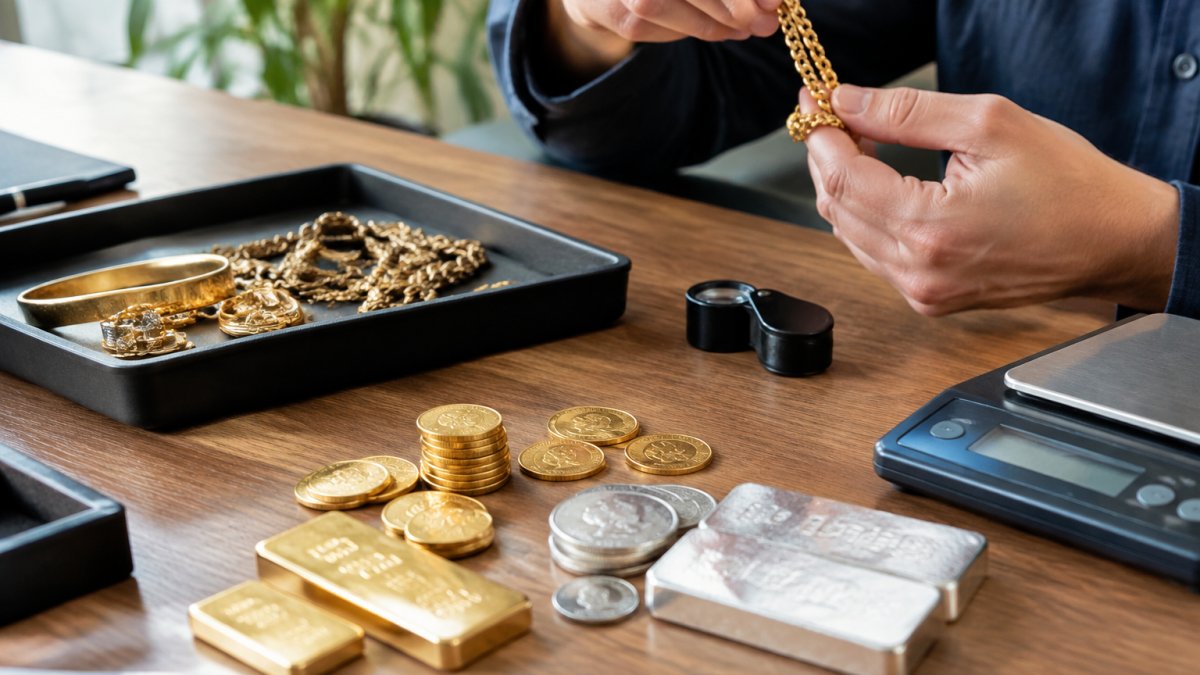
Last Updated: November 12, 2026
Quick Summary
To sell precious metals for the best fair offer, check the live spot price, calculate your item's melt value in troy ounces using its purity factor, and compare that against each dealer's buy price. Compare offers on net proceeds across local shops, online dealers, and auctions, and always ask for the calculation in writing.
- Weigh items in troy ounces and multiply by the purity factor, such as 14 divided by 24 for 14-karat gold.
- Compare offers on net proceeds, not the headline buy price, after shipping, commission, and settlement fees.
- Expect dealers to test items in front of you using magnification, acid or electronic testing, and magnet tests.
- Ask the buyer up front whether the transaction will be reported and on what form.
- Never hand over metal before payment clears, and use insured, tracked delivery only when shipping.
Table of Contents
- How to Sell Precious Metals: Start With the Spot Price vs Dealer Buy Price
- Comparing Your Selling Channels: Local Shops, Online Dealers, and Auctions
- How to Verify Gold and Silver Authenticity Before You Sell
- Tax Implications of Selling Precious Metals
- Selling Safely: Security, Shipping, and Picking a Reputable Buyer
- Bring Your Metals In for a No-Pressure Valuation
- Frequently Asked Questions
How to Sell Precious Metals: Start With the Spot Price vs Dealer Buy Price
Gold climbed above $4,500 per ounce in early 2026, according to CME Group's precious metals outlook, yet plenty of sellers still walk away with far less than they expect. The gap almost always comes down to one thing: not knowing the difference between the spot price and what a dealer actually pays.
Spot price is the current market price for one troy ounce of pure metal, quoted continuously during trading hours. Dealer buy price is what a buyer offers you after accounting for refining costs, market risk, and margin.
Start by checking the live spot price for your metal and weight. You can check live spot gold and silver prices on our site, updated continuously during market hours. Then compare that figure against the offer in front of you.
Calculating a Realistic Net Offer
A realistic net offer follows a simple formula you can run yourself:
- Weigh your item in troy ounces, not standard ounces.
- Multiply by the purity factor. For 14-karat gold, that is 14 divided by 24, or roughly 0.583.
- Multiply that pure-metal weight by the current spot price.
- Subtract the dealer's spread, which covers refining and margin.
Run the math before you accept anything. If an offer falls far below your calculated melt value, ask why. Ask any buyer to show you the calculation before you agree to anything.
Comparing Your Selling Channels: Local Shops, Online Dealers, and Auctions
The right channel depends on what you are selling, how much time you have, and how much of the spread you are willing to give up for convenience. The table below compares the four routes most sellers actually use, with the cost drivers that move net proceeds the most.
| Channel | Typical Time to Cash | Cost Drivers That Reduce Your Net | Best For |
|---|---|---|---|
| Local coin shop | Same day | Dealer spread (often the widest on scrap and jewelry), no shipping cost | Jewelry, scrap, mixed lots, small quantities |
| Online bullion dealer | Several business days to a few weeks | Buyback spread plus insured shipping and, on some programs, a minimum quantity | Standard bullion, high-volume lots, sellers who want a posted buyback price |
| Auction house | Weeks to months | Seller's commission plus buyer's premium pressure on hammer price, insurance, photography, and lot fees | Rare coins, key dates, estate collections with numismatic value |
| Private sale | Varies | Your time, authentication risk, and payment-verification risk | Informed collectors selling to other collectors |
What Each Channel Costs You in Time and Spread
Time is the hidden fee, and so is the spread. Compare the convenience of a same-day settlement against the buy rate and any other costs each channel involves before you decide.
A common pattern is that the channel with the lowest visible fee is rarely the channel with the highest net. Run the same item through two or three channels before you commit.
Worked Example: Comparing Net Proceeds on the Same Item
Assume you hold 1 troy ounce of .999 fine gold. Your gross melt value depends on the spot price at the time of sale. What you actually receive depends on the channel and on the deductions each buyer applies, so compare each offer on net proceeds.
The lesson: compare offers on net proceeds, not on the headline buy price. Ask every buyer for the calculation in writing so you can line the numbers up side by side.
Watch out: a quote that looks highest before shipping, commission, and settlement fees can be the lowest after them, always ask what is deducted and when payment clears.
For inherited estate collections, an in-person valuation avoids shipping high-value metal, and same-day settlement is available.
How to Verify Gold and Silver Authenticity Before You Sell
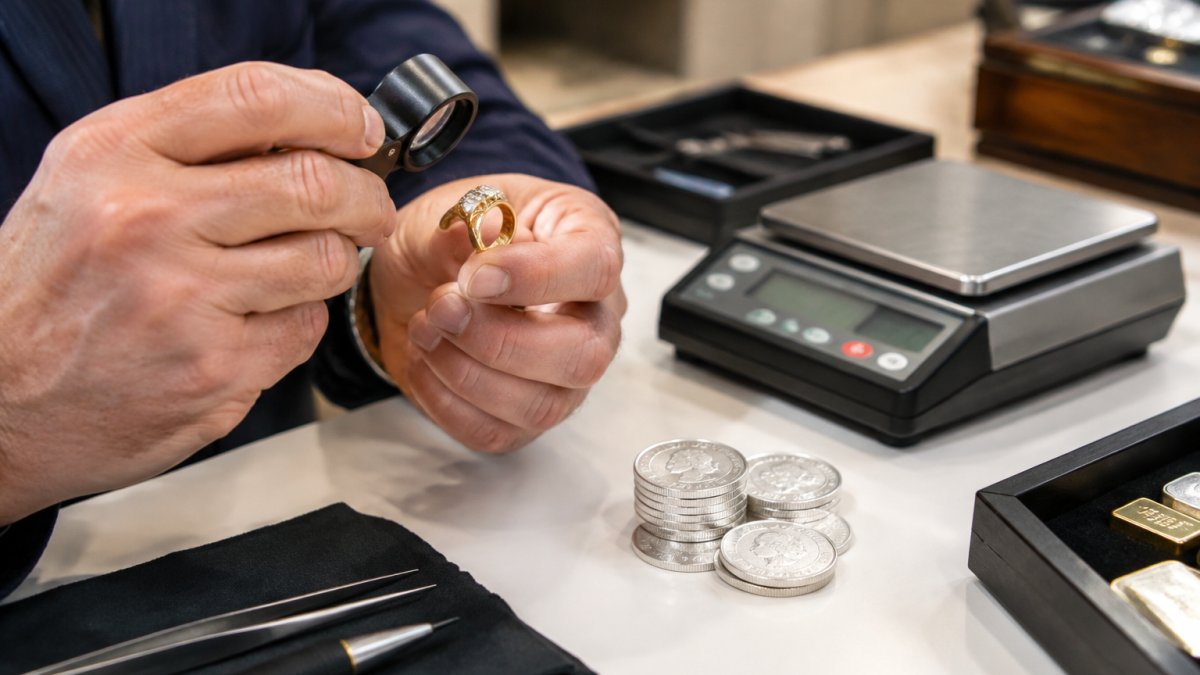
Verification protects both sides of the transaction. Expect any serious dealer to test items in front of you.
The man is American.
Standard checks include visual inspection under magnification, acid or electronic testing for karat, magnet tests for ferrous fakes, and weighing against expected specifications. If you want to see how bullion is weighed and documented in person, review gold and silver bullion sold by weight, and the same applies to bullion coins bought and sold by weight.
Fineness is the proportion of pure metal in an item, expressed in parts per thousand, such as 999 for fine silver. Karat measures gold purity in 24ths. Know both before you negotiate.
Tax Implications of Selling Precious Metals
Tax treatment depends on what you sold, how long you held it, and how the sale is reported. Tax treatment of precious metals depends on the type of metal and how it is held, so confirm the rules that apply to your situation with a tax professional.
What the Dealer Is Required to Report
A dealer's reporting obligation depends on the form of the metal and the size of the transaction. Two patterns matter most to sellers:
- Reporting requirements for precious metal sales depend on the form of the metal and the size of the transaction. Confirm the current requirements with the IRS or a tax professional before you sell a large lot.
Ask the buyer up front whether the transaction will be reported and on what form. A reputable dealer will tell you before you sign anything.
Records to Keep for Every Sale
Recordkeeping matters for every sale. Keep:
- Purchase receipts showing date, quantity, fineness, and price paid
- Appraisal documents for inherited or collectible pieces
- A written record of every sale: date, buyer, item, weight, fineness, and net proceeds
- Shipping receipts and insurance declarations if you sold to an online dealer
Records of what you paid and what you received help you calculate any taxable gain accurately.
When to Consult a Tax Professional
Consult a tax professional if any of the following apply: you inherited the metal and do not know the basis, you sold a large lot that may trigger dealer reporting, you held the metal for less than a year, or you are unsure whether an item is a collectible or personal-use property. For current thresholds and reporting rules, check IRS guidance on capital gains and collectibles before you file.
Ask any dealer for a written accounting of each transaction at the point of sale.
Selling Safely: Security, Shipping, and Picking a Reputable Buyer
Safety starts before the transaction. The U.S. Commodity Futures Trading Commission's consumer guidance advises sellers to ask how to find a reputable dealer and how to handle unsolicited offers, two questions worth taking seriously.
Use this checklist before you commit:
- Confirm the business has a physical location and verifiable reviews
- Ask to see the metal weighed on calibrated scales in front of you
- Request the offer calculation in writing
- Decline any pressure to sell on the spot
- If shipping, use insured, tracked delivery only
- Never hand over metal before payment clears
For local buyers, read verified customer reviews before your first visit. A hotel pop-up event with no permanent address is a very different proposition from an established shop with a track record.
Bring Your Metals In for a No-Pressure Valuation
The best way to learn what your metals are worth is to have them assessed in person. We weigh items on calibrated scales in front of you and provide a written accounting of each transaction.
We have 18 years in business and an A+ BBB rating, with same-day settlement in cash or check if you decide to proceed. We assess collector coins individually and take broken or mismatched estate pieces without judgment. Ask Anything about scheduling a private appointment or stopping in.
Metal prices are near historic highs, but a strong market only rewards sellers who know how to read an offer.
Frequently Asked Questions
What is the best way to sell precious metals for the highest return?
Compare at least two or three offers before committing, and ask each buyer to show the spot price they are pricing against. The spread between spot and the dealer's buy price matters for every sale. Consider whether collector pieces may carry value above melt before you sell. A local dealer who weighs your items on calibrated scales in front of you and puts the calculation in writing gives you a number you can check.
Do I have to pay taxes when I sell precious metals?
Yes, in most cases. Tax treatment of precious metal sales depends on how the metal was held and sold, so keep your purchase records, receipts, and any appraisal documents. Confirm your specific situation with a tax professional before you sell, and keep a written record of every transaction.
How can I verify the authenticity of my metals before selling?
Check for the expected hallmarks and fineness stamps, and ask the buyer to weigh each piece on a calibrated scale in front of you. A reputable dealer will test items in front of you and explain what the test shows before making an offer.
What is the difference between selling to a local dealer versus an online buyer?
A local dealer lets you watch the weighing, ask questions face to face, and settle the same day in cash or check. Online buyers may quote higher headline prices but add shipping risk, insurance costs, and a waiting period before you see the final number. If you ship, use insured and tracked delivery and photograph every item first.
