
how-to
How to Identify Real Silver: 7 Tests That Work
Editorial Team · · 11 min read
Last Updated: November 7, 2026
Quick Summary
To identify real silver, read the hallmark first, then verify it with at least two physical tests, because a stamp alone is never conclusive proof. Sterling silver is stamped 925 and contains 92.5% pure silver, while fine silver is 99.9% pure. Combine visual inspection, the magnet test, and the ice test in that order, and escalate to professional XRF analysis for valuable pieces.
- Sterling silver contains 92.5% pure silver and 7.5% other metals, usually copper.
- Real silver is nonmagnetic, so a strong magnet should slide off with no pull.
- Silver has high thermal conductivity, so it melts ice quickly compared with other metals.
- We advise against the lighter test because heat can warp silverware and loosen stone settings.
- XRF analysis is a nondestructive scan that reads full metal composition in seconds.
Table of Contents
- How to Identify Real Silver 925: Start With the Marks
- How to Tell If Silver Is Real by Looking at It
- How to Tell If Silver Is Real or Plated: The Magnet and Ice Tests
- How to Tell If Silver Is Real With a Lighter (and Why It Is Risky)
- The Ping Test and Chemical Tests: What They Prove and What They Miss
- A Decision Tree for Combining Tests on Jewelry, Flatware, and Coins
- When Home Tests Fail: Professional Verification and Selling With Confidence
- Frequently Asked Questions
How to Identify Real Silver 925: Start With the Marks
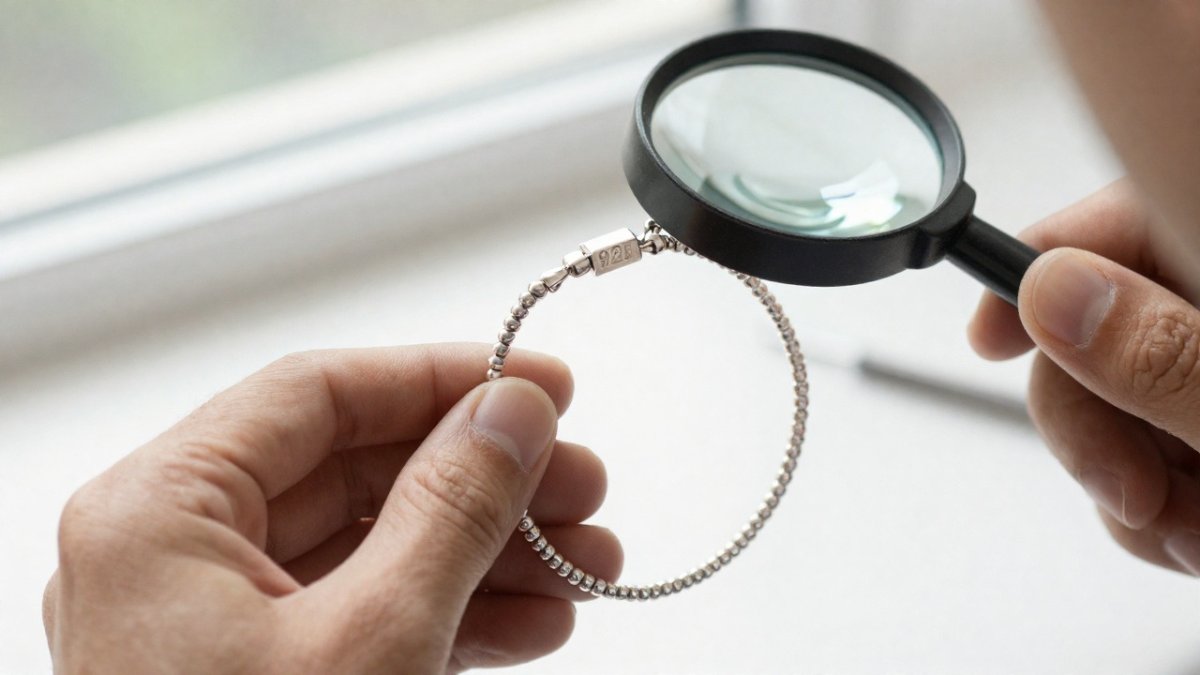
Learning how to identify real silver starts with one small stamp, but that stamp is only the beginning. A hallmark alone should never be treated as conclusive proof that an item is genuine, and U.S. law does not require every silver item to carry a quality mark at all, according to Federal Trade Commission guidance on buying precious metals.
Here is the practical rule we give people. Read the mark first, then verify it with at least two physical tests.
What 925, Sterling, and Fine Silver Actually Mean
Sterling silver is an alloy that contains 92.5% pure silver and 7.5% other metals, usually copper. The number 925 is simply sterling's purity stamp.
Fine silver is 99.9% pure silver. It is softer and less common in everyday jewelry.
- 925 or "sterling": 92.5% silver
- 999 or "fine": 99.9% silver
- 800, 835, 900: lower silver content, often European
Look for a maker's mark too. A stamp with a maker's mark plus a purity number is harder to fake than a lone "925."
How to Tell If Silver Is Real by Looking at It
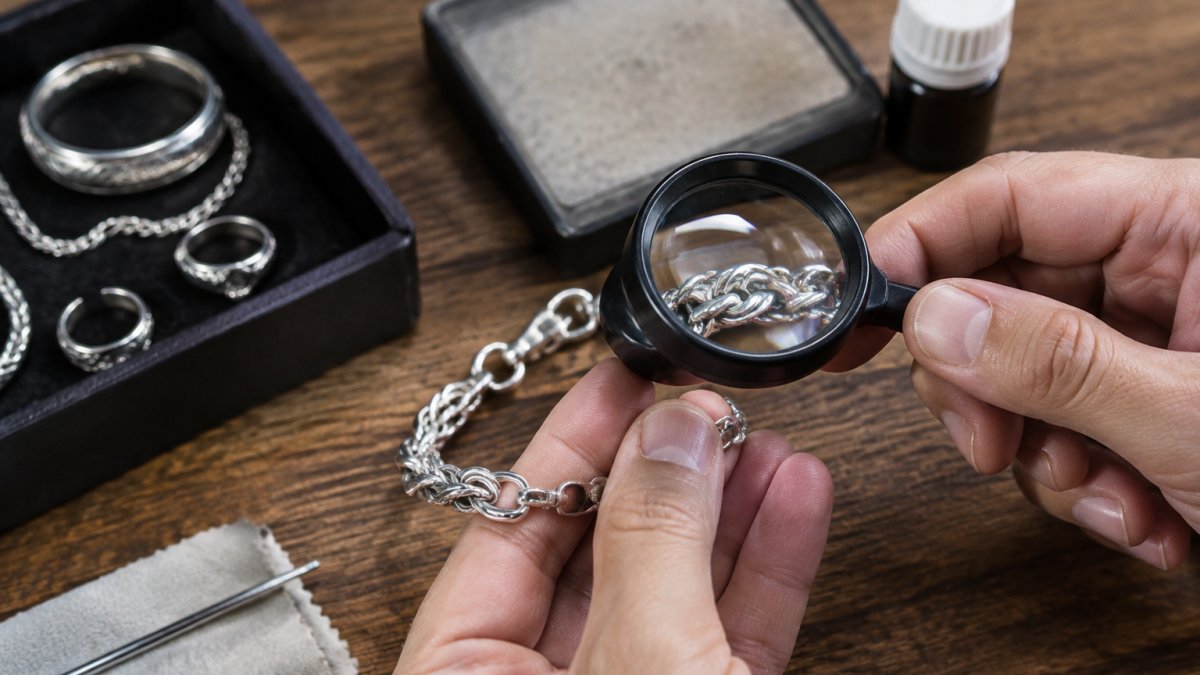
Visual inspection is the fastest first pass, but it cannot confirm authenticity on its own. A magnifying glass or your smartphone camera's zoom can help you study the surface before you test anything.
What to look for:
- Tarnish: real silver darkens to gray, black, or brownish-yellow over time as it reacts with sulfur compounds in the air. Tarnish is a surface film, not a coating, and it polishes away without removing metal.
- Discoloration patterns: plating often wears thin at high-contact spots, showing base metal underneath. On a ring, check the inner band and the edges of the shank; on flatware, check tines, bowls, and the high points of the handle.
- Wear on edges: silver plate flakes or chips; solid silver wears smooth. A plated piece can also show a sharp line where the plating ends, especially at solder joints or edges.
A concise comparison helps you interpret what you see:
| Type | Composition | Common markings | Expected visual and test results |
|---|---|---|---|
| Fine silver | 99.9% silver | 999, fine silver | Soft, bright white; tarnishes; nonmagnetic; rings clearly on rigid pieces |
| Sterling silver | 92.5% silver, 7.5% copper or other metals | 925, sterling, STERLING | Warm white; tarnishes; nonmagnetic; rings clearly on rigid pieces |
| Silver plate | Thin silver layer over copper, brass, or nickel | EPNS, EP, silverplate, quadruple plate | Wears at high-contact points; may show base metal; can be magnetic if the core is steel |
| Silver-filled | Thick silver layer bonded to a base metal core | 925 filled, silver filled, vermeil (gold over silver) | Layer can wear through; test results depend on where you test |
Watch out: silver polish can hide tarnish and disguise plating wear. Inspect before you clean, and photograph any marks or wear patterns so you can compare them after testing.
How to Tell If Silver Is Real or Plated: The Magnet and Ice Tests
Two household tests answer the plating question faster than anything else. Both are quick, and both have real limits.
The magnet test. Real silver is nonmagnetic. A strong magnet should slide off with no pull.
- No attraction: consistent with silver, but also with copper, brass, and aluminum
- Strong attraction: the piece contains iron or steel, so it is plated or fake
- Slight pull: often a plated item with a magnetic core
A magnet can rule pieces out. It cannot rule them in.
The ice test. Silver has high thermal conductivity, so it melts ice quickly.
- Fast melting and a cold feel through the metal: consistent with silver
- Slow melting: likely another metal
This test is suggestive, not conclusive. Aluminum conducts heat well too.
How to Tell If Silver Is Real With a Lighter (and Why It Is Risky)
The lighter test is popular online, and we advise against it.
Here is the problem. The test tells you almost nothing reliable, and it can damage the item.
- Heat can warp thin silverware and loosen stone settings
- Soot and oxidation can leave marks that look like tarnish
- Plated pieces may pass or fail depending on the base metal
If you must try it, use a hidden spot and a one-second pass. Better yet, skip it and use a nondestructive test instead. A ruined heirloom costs more than a professional appraisal.
The Ping Test and Chemical Tests: What They Prove and What They Miss
The ping test and chemical tests each answer a narrow question.
The ping test. Tap the item with a fingernail or a soft mallet and listen.
- Real silver rings with a clear, high-pitched sound that fades slowly.
- Plated or fake pieces often give a dull thud.
- The catch: silver's sound depends on shape and thickness. A thin chain will never ring like a heavy spoon, and a piece with a loose stone or a hollow handle can sound dull even when it is sterling.
Chemical tests. Silver-testing solution and acid tests work by reacting with the surface.
- A drop on a hidden spot changes color based on metal content, and results are read against a reference chart.
- These tests leave a mark, so treat them as destructive. On jewelry, test inside a clasp or on the back of a pendant; on flatware, test the underside of a handle.
- A false negative can occur on plated items if the acid eats through the silver layer to the base metal, and a false positive can occur on alloys that contain some silver but are not sterling.
- The bleach test is worse: household bleach can stain and pit silver, and results vary wildly with concentration and exposure time. Skip it.
| Test | What It Proves | Risk | Reliability |
|---|---|---|---|
| Hallmark check | Claims a purity standard | None | Low alone |
| Visual inspection | Flags plating and wear | None | Low to moderate |
| Magnet test | Rules out magnetic cores | None | Moderate |
| Ice test | Suggests thermal conductivity | None | Low to moderate |
| Ping test | Suggests metal density | None | Low |
| Lighter test | Almost nothing | High, can damage | Poor |
| Acid or solution test | Surface metal content | Marks the item | Moderate |
| XRF analysis | Full metal composition | None | High |
Watch out: acid and solution tests can damage antique finishes, stone settings, and plated layers, so use them only on hidden spots and only after nondestructive tests are inconclusive.
A Decision Tree for Combining Tests on Jewelry, Flatware, and Coins
No single test settles the question. Combine them in order, and stop as soon as you have a clear answer.
- Check the marks. Find the purity stamp and maker's mark.
- Inspect visually. Look for plating wear, flaking, and tarnish patterns.
- Run the magnet test. Any strong pull means you are done: it is not solid silver.
- Run the ice test. Fast melting supports silver; slow melting does not.
- Try the ping test. A clear ring supports silver on rigid pieces.
- Weigh and measure. Compare against expected weight for the size.
- Escalate to professional testing if results conflict or the item is valuable.
Apply this differently by item type:
- Jewelry: check clasps and inner bands for stamps; skip acid on gemstone pieces
- Flatware: weigh pieces and compare; plating wear on tines and bowls is common
- Coins: never clean or scratch them; numismatic value drops fast with surface damage
Watch out: cleaning a coin to "test" it can cut its value dramatically. Leave old coins alone.
Once your tests point toward genuine sterling, the next step is often a valuation. Our page on sterling ware, flatware, and sterling jewelry explains how appraisal, buying, and selling work. For coins, bullion coins bought and sold by weight covers how sovereign issues and generic rounds are weighed and documented.
When Home Tests Fail: Professional Verification and Selling With Confidence
Professional testing settles what home tests cannot. The standard method is XRF analysis, a nondestructive scan that reads the full metal composition in seconds.
Here is when to stop testing at home:
- The item is an heirloom, antique, or high-value piece
- Tests give conflicting results
- You plan to sell and want a documented valuation
- The piece has stones, mixed metals, or an unknown finish
Before you sell, check current gold and silver prices so you know the live spot market for the day.
We built The Gold and Silver Exchange around that idea. When you are ready, visit us or send a message to set up a private appointment or walk in.
Testing silver at home gets you close, but the final answer often needs a calibrated scale and an XRF readout.
Frequently Asked Questions
Can you test real silver with vinegar?
Vinegar is a weak acid, so it reacts slowly with silver and can leave a dull or slightly darkened patch on a genuine piece if left on too long. It is not a reliable test. A real silver item will not fizz or turn bright green the way some plated base metals do, but a lack of reaction does not confirm purity. If you try it, use a drop on a hidden spot, rinse and dry it right away, and treat the result as a hint rather than proof.
Can a magnet tell you if silver is real?
A magnet can rule some fakes out, not confirm a piece is real. Silver is nonmagnetic, so a strong pull toward a magnet means the item contains iron, steel, or nickel and is not solid silver. A magnet that does nothing only tells you the piece is not strongly magnetic. Many plated items have a brass or copper core, which also does not react to a magnet, so a silent magnet still needs a hallmark or a second test to back it up.
How do you tell real silver from silver-plated items?
Look for a purity stamp first: sterling is marked 925 or Sterling, fine silver is marked 999, and silver plate usually carries words like EP, EPNS, or Silver Plate instead of a purity number. Then check wear points such as ring bands, fork tines, and the edges of trays. Plated pieces show the base metal through the worn spots, often a coppery or brassy tone. A magnet and ice test can support what the marks suggest but will not separate thin plating from solid silver on their own.
How much is 1 gram of 925 sterling silver worth?
Sterling is 92.5 percent silver, so one gram contains 0.925 grams of pure silver. Multiply that by the current spot price per gram to get the melt value, then expect any buyer to pay below spot to cover refining and margin. Spot prices change daily, so check a live quote rather than a fixed figure. A dealer using calibrated scales and showing you the live spot price should be able to walk you through the calculation line by line.
